On this page
On this page
Academic Project
DecMed - PGHD
Final project: DecMed, IOTA-based medical record, now integrated with Patient-Generated Health Data!
Sep 2025 – Jul 2026
Description
DecMed is an IOTA-based decentralized electronic medical records system developed by I Putu Bakta Hari Sudewa. DecMed was developed to address the problem of access control in Indonesia's non-patient-based medical records system and the fragmented data management across different healthcare facilities and providers.
DecMed utilize capability access control and proxy re-encryption as access control and authorization enforcement policy. CapBAC was chosen because it allows patients to control who can perform what actions on which resources. Proxy re-encryption acts as middleware service so patient doesn't need to gives his private key to other parties if they want to access patient's data. For a more in-depth discussion to help you understand the DecMed system, please refer to the following publication.
Alright, now for the part I actually worked on. Currently, DecMed only allows medical data to enter the system during a clinical visit; healthcare professionals input this data when patients arrive at a healthcare facility. However, what about the patient's condition outside of these visits? How can healthcare professionals obtain a complete picture of a patient's health status if data is only recorded during consultations?
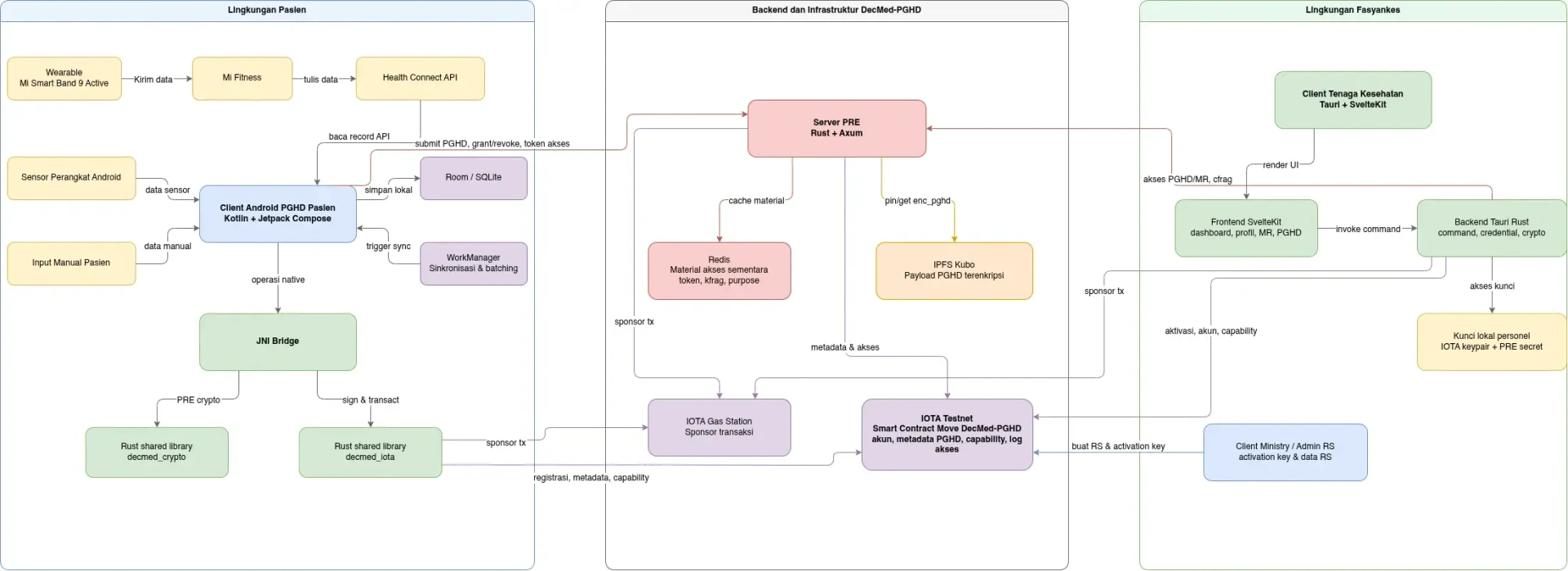
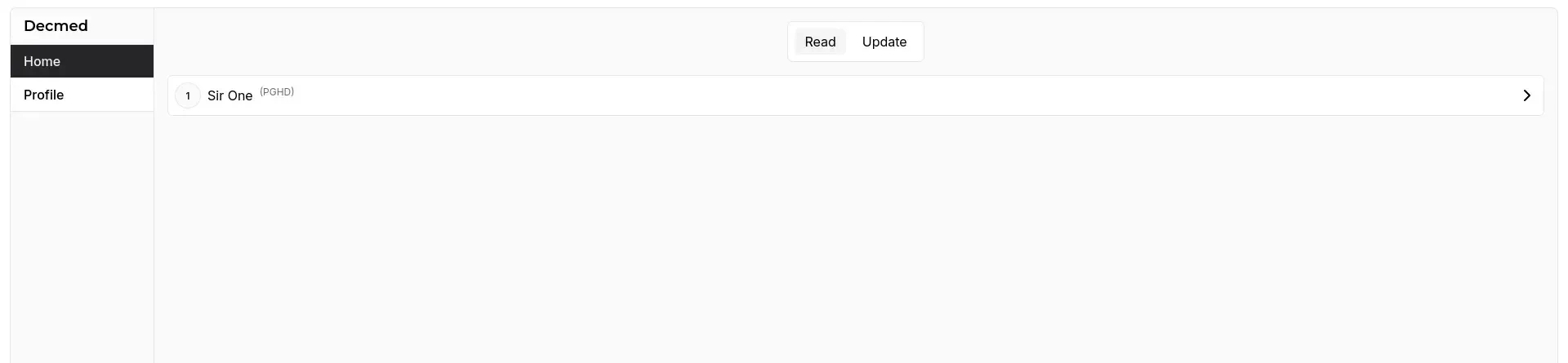
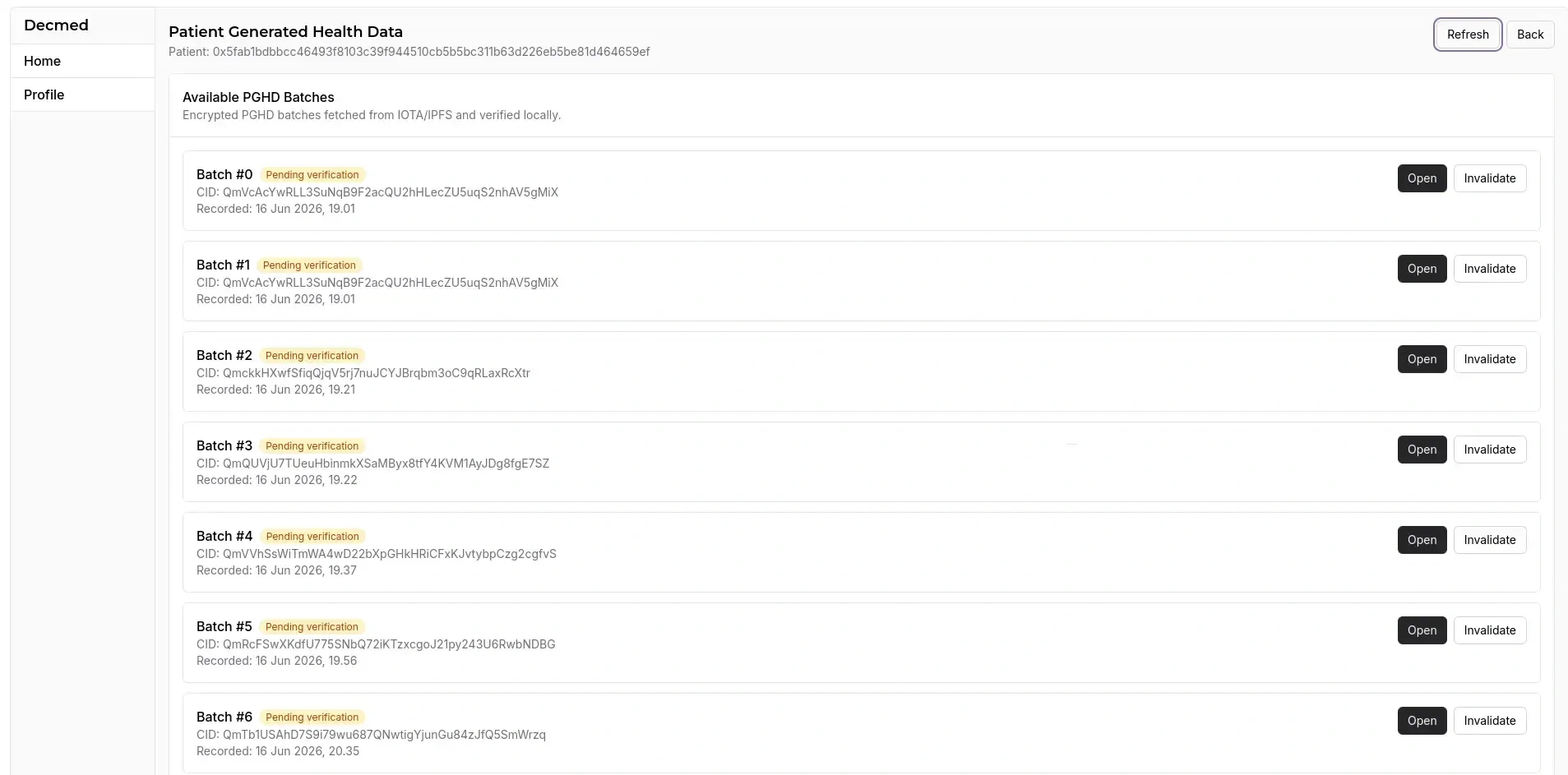
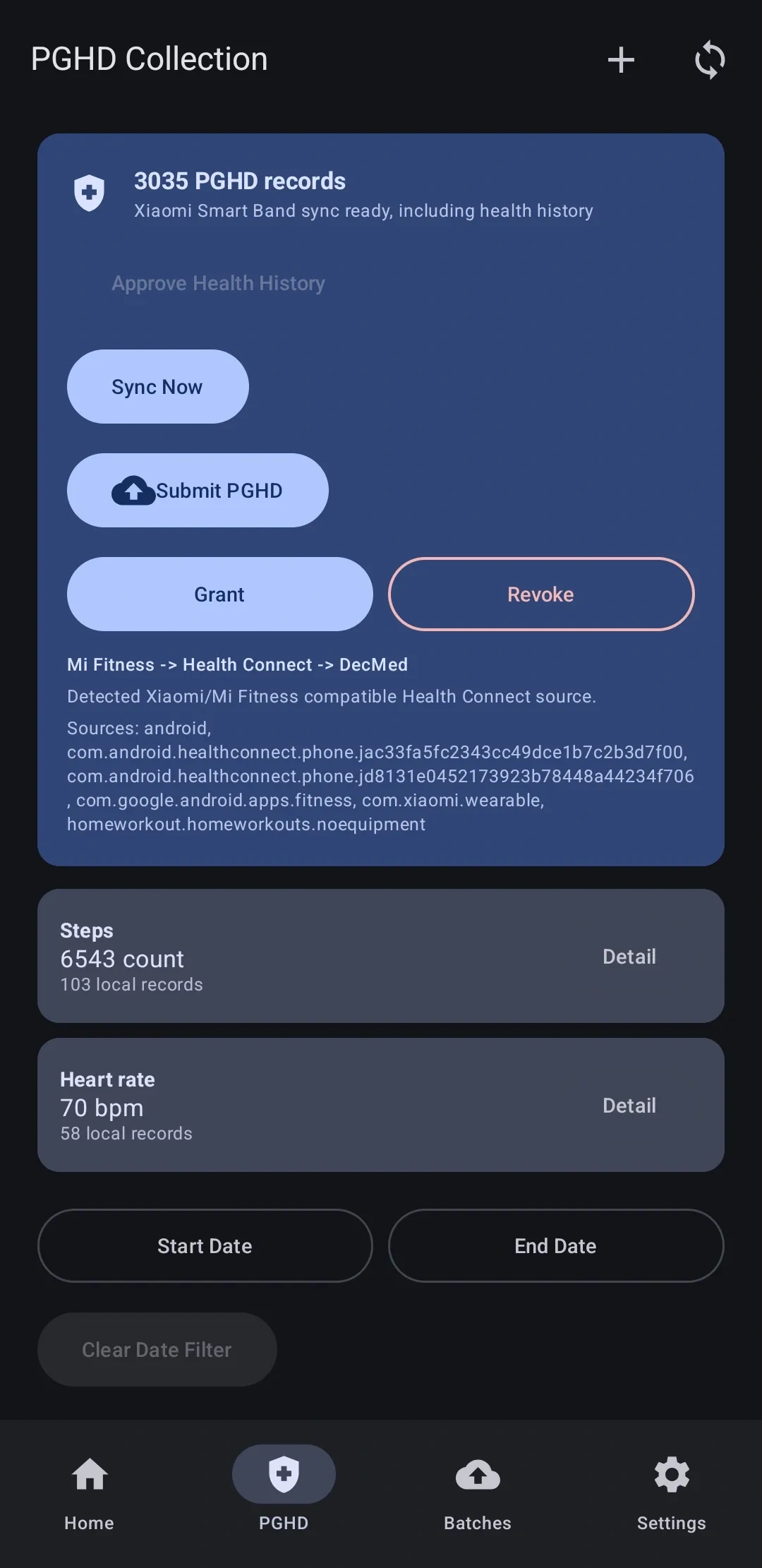
To address this, Patient-Generated Health Data (PGHD)—data produced independently by patients—has been integrated into the DecMed medical record system. To facilitate this data input, DecMed's functionality was expanded to include mechanisms for collecting, processing, transmitting, and accessing PGHD.
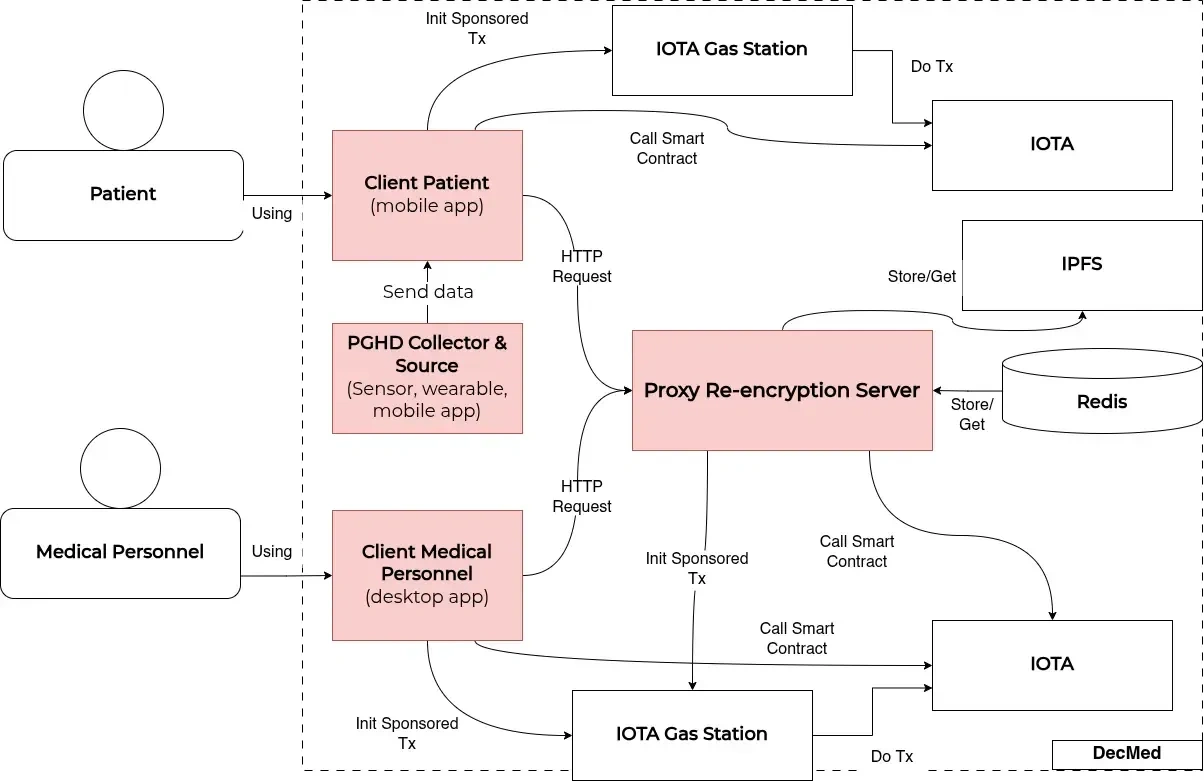
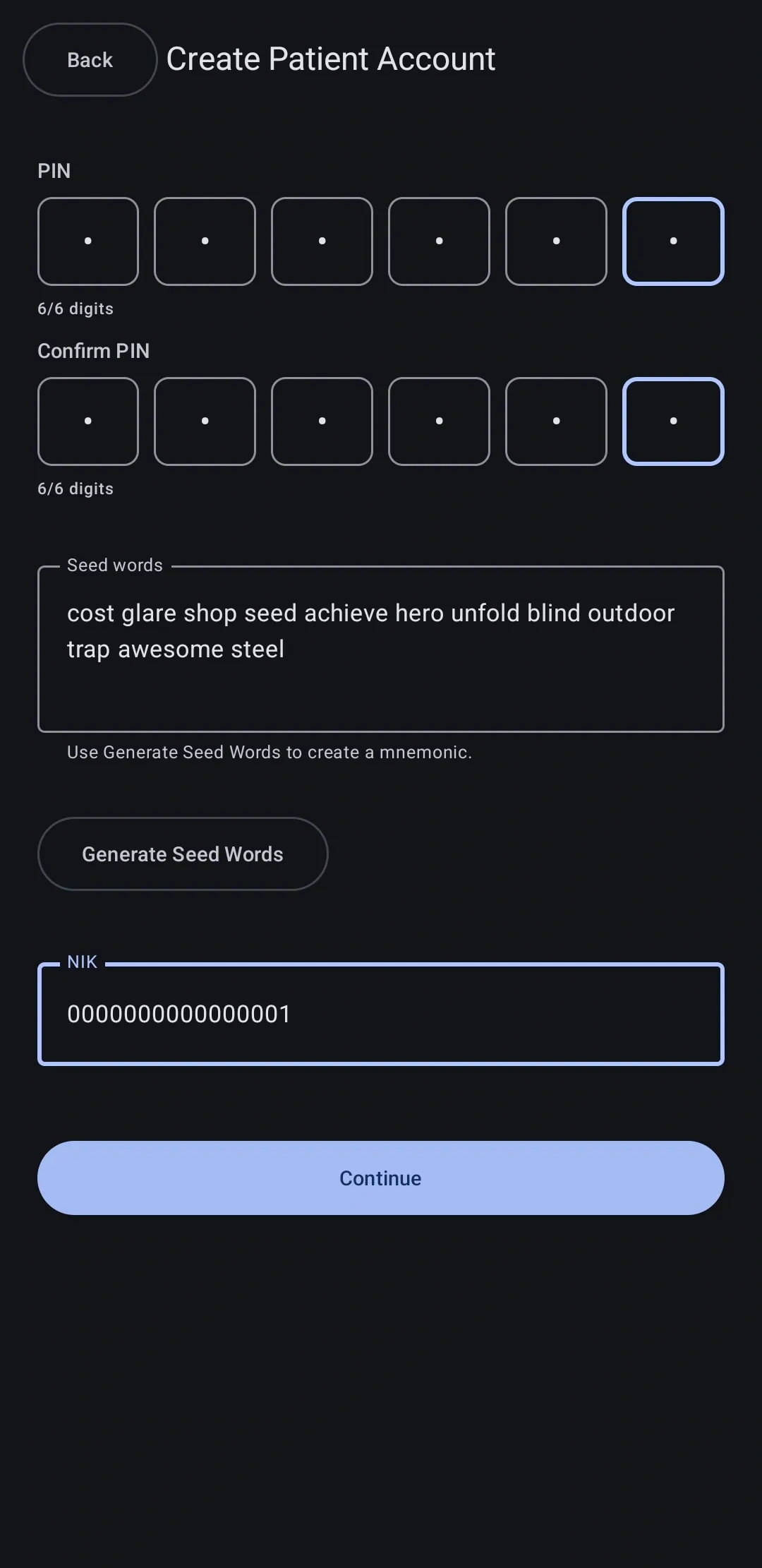
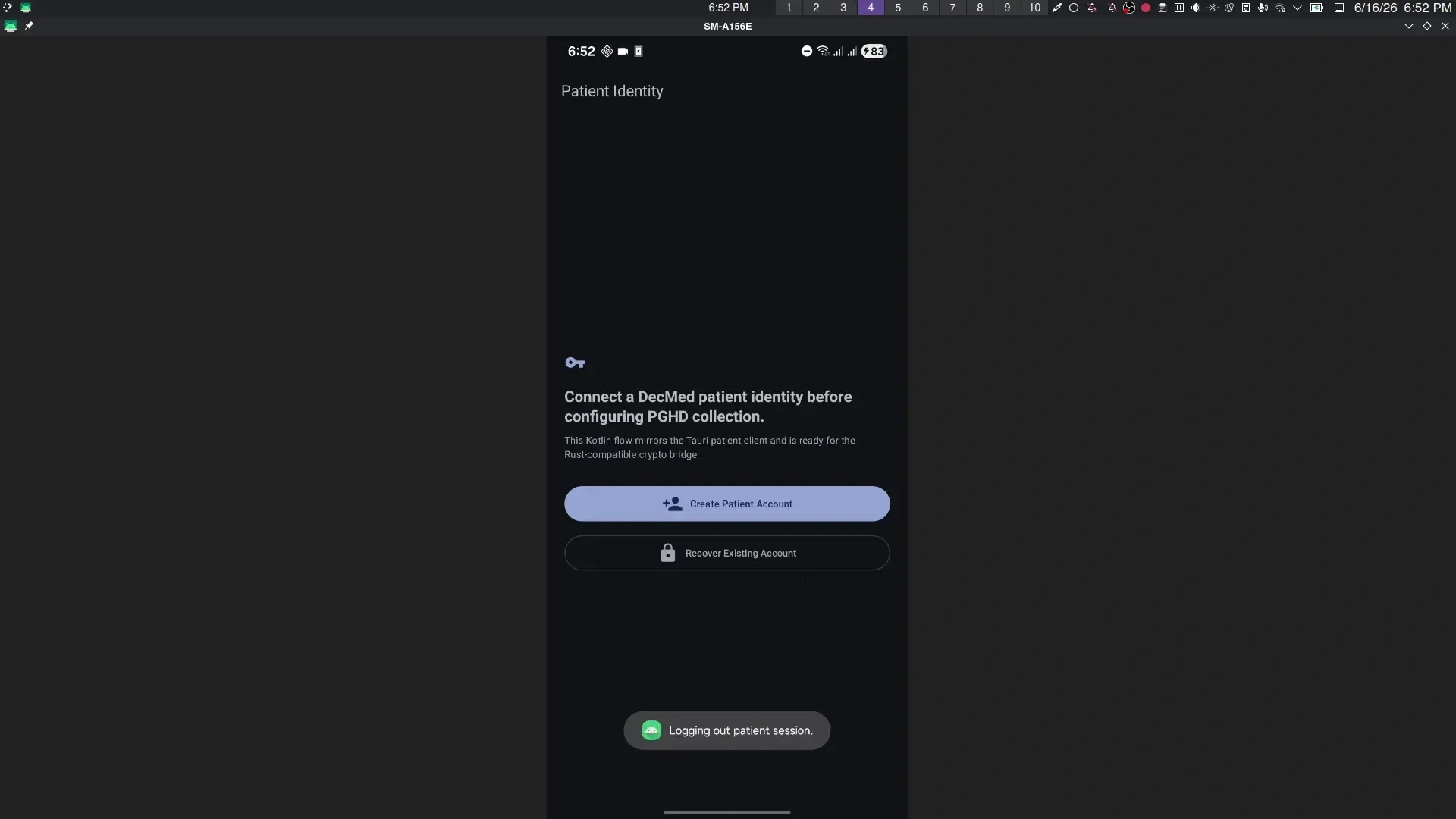
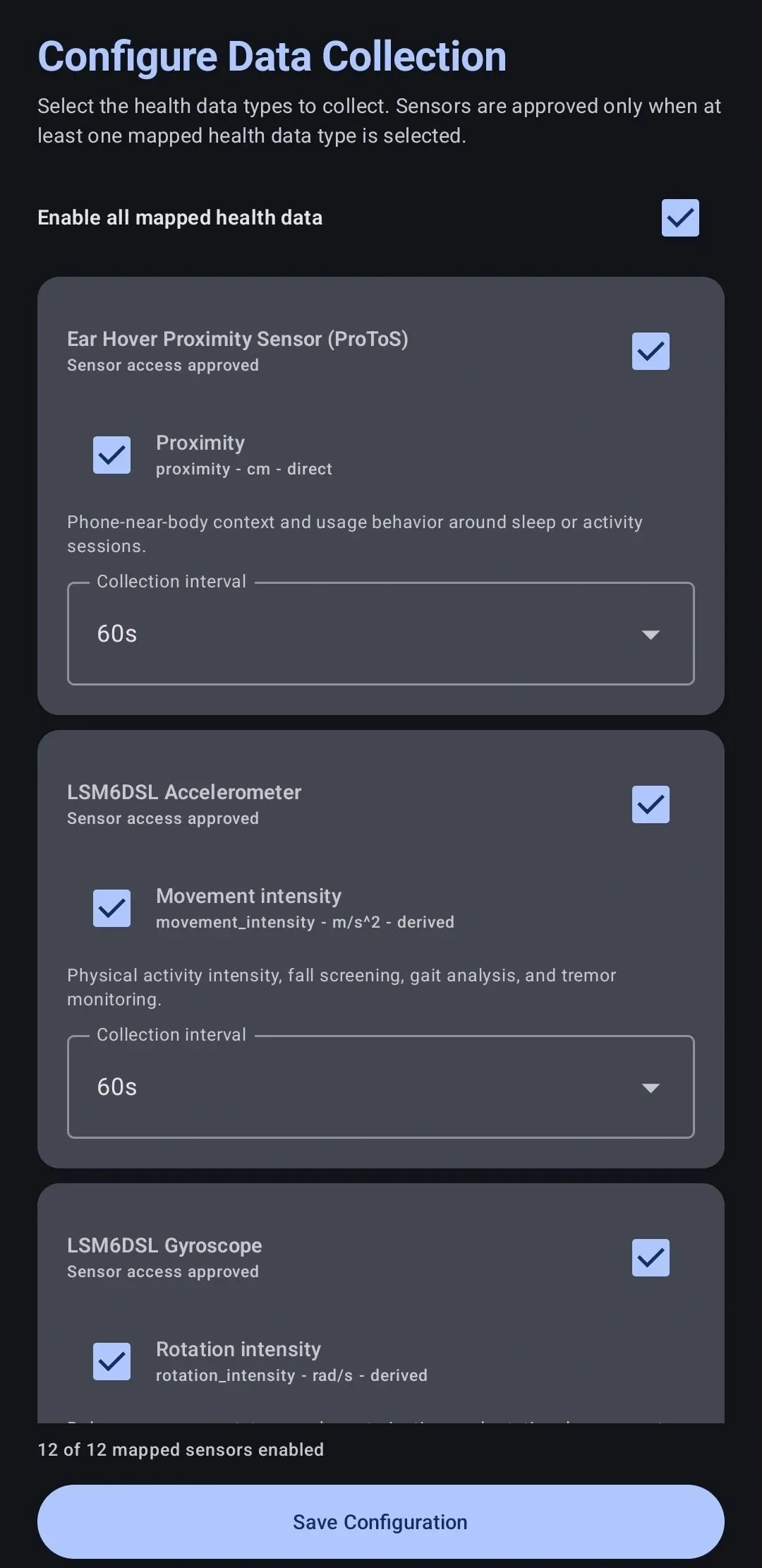
In this system, PGHD is gathered from patient devices and through manual patient input. A dedicated native mobile application was developed to collect PGHD from the sensors built into the patient's device; a native app was chosen because Tauri-based applications cannot directly access device sensors or data.
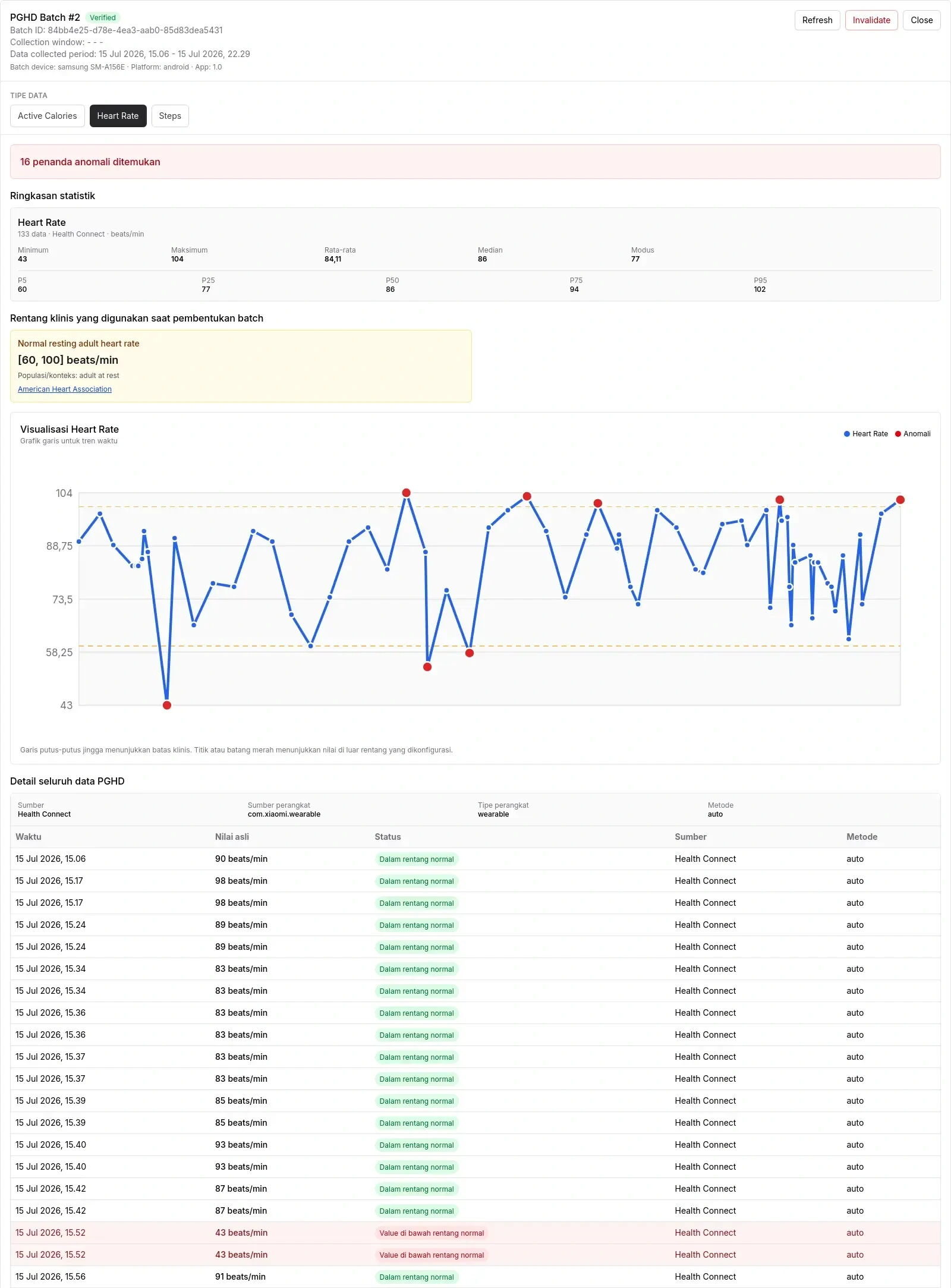
The collected PGHD is then processed into a format understandable by healthcare professionals—presenting medical information and graphs—and transmitted to the DecMed system via IOTA and IPFS. Transmitted data is end-to-end encrypted using AES-GCM, with the AES-GCM key itself encrypted using ECDSA. If a patient grants a healthcare professional permission to view the PGHD, the professional can decrypt the encrypted AES-GCM key and subsequently decrypt the PGHD.
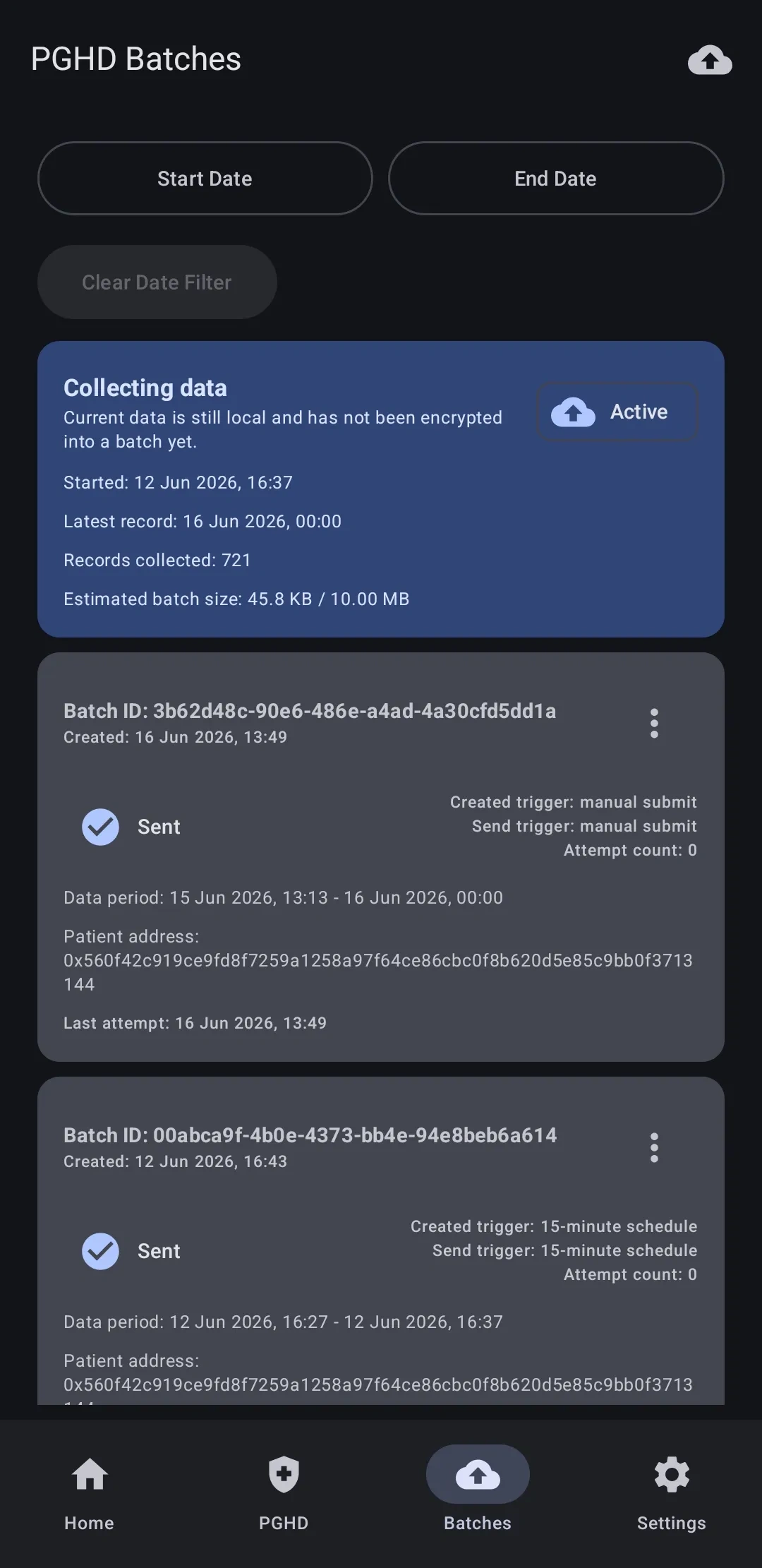
Beyond ensuring data confidentiality, system integrity is maintained by hashing the data and generating a digital signature. If the PGHD payload is corrupted, hash and digital signature verification will fail, rendering the PGHD inaccessible. Regarding availability, to manage the volume of PGHD transmitted from patient devices to DecMed, the system implements batching, periodic transmission triggers, and volume-based transmission triggers to prevent excessive transmission frequency. Furthermore, the DecMed-PGHD system components are developed using a loosely coupled architecture to avoid interdependencies.
Media